Everyone has opinions on slide order. Here's what actually matters, and what doesn't.
The standard order
Most pitch deck templates follow some variation of this:
- Title (one-liner)
- Problem
- Solution
- Product
- Market
- Competition
- Business model
- Traction
- Team
- Ask
This order exists because it tells a logical story: here's a problem, here's how we solve it, here's why it's a big opportunity, here's why we're the ones to do it, here's what we need.
It works. But it's not sacred.
When to break the order
Lead with traction (if you have it)
If you have strong traction (real revenue, impressive growth, notable customers), put it early. Maybe even slide 2.
Why: Traction answers most investor questions before they're asked. It proves the problem is real, the solution works, and customers will pay. Everything after becomes supporting evidence.
When to do this:
- $10K+ MRR for pre-seed
- $50K+ MRR for seed
- Notable logos (Fortune 500, recognizable brands)
- Exceptional growth rate (30%+ MoM)
Lead with team (if you're exceptional)
If your team has built and exited before, or has unique domain expertise, lead with that.
Why: At pre-seed especially, investors are betting on people. A team slide showing 2 Stanford PhDs who spent 10 years at Google working on this exact problem changes the entire evaluation.
When to do this:
- Previous successful exits
- Deep domain expertise (10+ years in industry)
- Technical credentials that directly apply (published research, patents)
- Founder-market fit that's obvious and strong
Lead with the problem (if it's urgent or surprising)
If your problem statement is genuinely compelling, either because it's urgent (regulatory deadline, market shift) or surprising (hidden cost, counterintuitive insight), let it hook them first.
Why: A strong problem slide creates "I need to know more" energy. It makes investors lean in.
When to do this:
- Time-sensitive market opportunity
- Problem you've personally experienced (founder story)
- Surprising data that challenges assumptions
- Clear "why now" that's specific to this moment
What doesn't matter
The exact slide count
10 slides vs 12 slides vs 15 slides? Doesn't matter. What matters: can you tell your story clearly? If you need 8 slides, use 8. If you need 14, use 14.
Whether market comes before or after competition
These slides are supporting context. Move them around to fit your narrative. If your competitive insight is your main advantage, put competition earlier. If market size is your story, lead with that.
Appendix vs main deck
Some founders obsess over what goes in the appendix. Simple rule: if you'd want to talk about it on a call, it's main deck. If it's reference material, it's appendix.
The one thing that matters
Clarity beats cleverness.
A clear deck in standard order beats a clever deck with a "unique structure" that confuses investors.
Ask yourself:
- After slide 3, do they know what you do?
- After slide 5, do they know why it matters?
- After slide 7, do they want to learn more?
If yes, your order is fine.
Testing slide order
A practical test:
Send your deck to 3 people who don't know your company. Ask them to read only the first 5 slides. Then ask:
- What does this company do?
- What stage are they at?
- What's interesting about this?
- What would you want to know next?
Their answers tell you if your order is working. If they're confused about basics after 5 slides, your opening isn't strong enough. If they're not curious to learn more, your hook isn't working.
The investor reading pattern
Research on how investors actually read decks shows:
- Title slide: 5 seconds (one-liner is critical)
- Problem/solution: 15-20 seconds each
- Traction: 20-30 seconds (most scrutinized slide)
- Market: 10 seconds (often skimmed)
- Team: 15 seconds
- Competition: 10 seconds
- Financials: Often skipped entirely
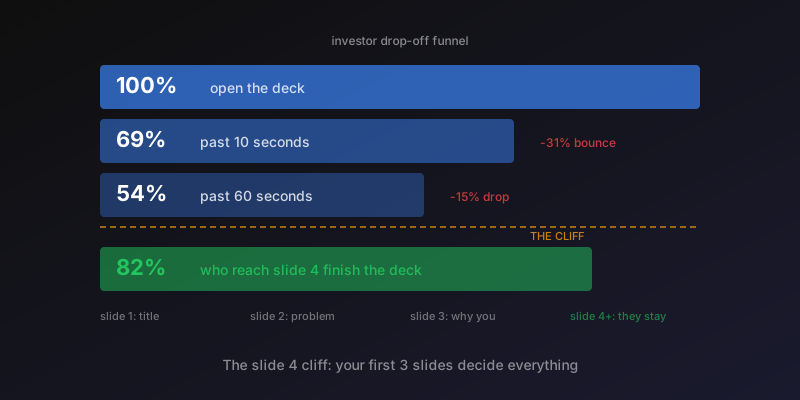
This means: optimize your first 3 slides for clarity. Make your traction slide bulletproof. Don't overthink the middle slides.
My recommendation
For most early-stage companies:
- Title: One-liner + stage + what you're raising
- Hook: Your strongest asset (traction, team, or problem)
- Problem: Specific and felt
- Solution: What you do, simply
- Product: Screenshots or demo (optional)
- Why now: The market shift
- Traction: Whatever you have
- Market: Bottom-up sizing
- Team: Why you
- Ask: Amount + use of funds
Move slide 2 (the hook) based on your strength. Everything else can flex.
The final test
Read your deck out loud. Does it flow like a conversation? Or does it feel like a checklist?
Good decks feel like: "Here's what we're doing, here's why it's exciting, here's why we'll win."
Bad decks feel like: "Here's the problem slide. Here's the solution slide. Here's the market slide."
The order should serve the story. Not the other way around.
Enjoyed this article? Share it.