Your deck got you the meeting. That part is over. Everything that happens next is due diligence, and most of it has nothing to do with your slides.
Investors in 2026 are running sophisticated, often AI-driven, due diligence processes that go far beyond what you present in a pitch meeting. They are checking the metadata of your business, the unpolished, real-time signals that tell a different story than the one you curated.
This is not paranoia. It is just how the process works now. AI is changing the way VCs evaluate startups, automating much of the digging that used to take weeks. A partner can now surface red flags before your follow-up email lands.
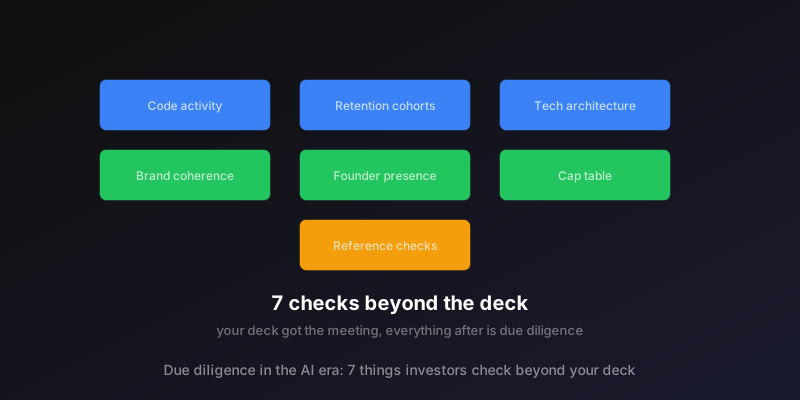
Here are seven things investors check after your deck impresses them, and how to make sure each one holds up.
1. Your GitHub and code activity
What they look for: Shipping velocity. Commit frequency. How many contributors are active. Whether the codebase is growing or stagnant. They want to see consistent, recent activity, not a burst of commits the week before your pitch.
Investors or their technical advisors will look at your public repositories, contribution graphs, and release cadence. For developer tools and infrastructure companies, this is especially scrutinized. But even for non-technical products, they want evidence that you are building, not just talking.
They also notice patterns. A repo with 500 commits from one person tells a different story than one with 500 commits from five people. Neither is automatically better, but they read both.
How to prepare: Keep your public repos active. If your core product is private, maintain at least one or two public projects that show your team's engineering quality. Write clear commit messages. Tag releases. Use issues and pull requests properly. Your GitHub profile is a resume that updates itself.
If you are a solo technical founder, this actually works in your favor. A steady stream of commits from a single person building real features is a strong signal.
2. Customer retention cohorts
What they look for: Growth numbers are easy to inflate. Retention is hard to fake. Investors want to see monthly cohort analysis: how many customers who signed up in January are still active in March, June, December.
They will ask for this data directly, but they also triangulate. They check review sites, social media mentions, and customer testimonials. They look at whether your NPS or customer satisfaction data is consistent with what your deck claims.
The specific thing that raises alarm: a traction slide showing impressive MRR growth alongside declining cohort retention. That pattern means you are filling a leaky bucket. Investors recognize it instantly.
How to prepare: Track cohort retention from day one. Even if your numbers are small, having clean data matters more than having perfect data. If your retention is weak in early cohorts but improving, show the trend. Investors understand that early product iterations lose customers. What they want to see is that you learned and fixed the problems.
Build a simple dashboard you can share. A Google Sheet with monthly cohorts works fine at pre-seed. You do not need expensive analytics tools.
3. Technical architecture
What they look for: This matters for every software company, but it is especially rigorous for AI startups. Technical due diligence now covers proprietary datasets, model training processes, and red-teaming practices. Investors want to understand what you actually built versus what you assembled from APIs.
For AI companies, they ask: do you have proprietary data? Are you fine-tuning models or just calling OpenAI? What happens to your business if your model provider changes pricing or terms? How do you handle hallucinations and edge cases?
For all software companies, they assess scalability, technical debt, and architecture choices. They might bring in a technical advisor to review your stack. A monolithic application with no tests tells a story. A well-structured codebase with CI/CD and monitoring tells a different one.
How to prepare: Document your architecture decisions. Have a clear answer for "what did you build versus buy." If you use third-party AI models, articulate your defensibility, whether that is proprietary training data, domain-specific fine-tuning, or a unique application layer.
If your codebase is messy (and most early-stage codebases are), be honest about it. "We shipped fast and accumulated debt, here is our plan to address it" is a better answer than pretending everything is clean when a technical reviewer will find out it is not.
4. Brand coherence across touchpoints
What they look for: Your pitch deck tells one story. Your website, product, social media, and job postings each tell another. Investors check whether these stories match.
If your pitch deck looks like a Fortune 500 company, but your website looks like it was built in 1999, it creates cognitive dissonance. That dissonance makes investors question which version is real.
They will visit your website immediately after a meeting. They will check your product if it is publicly accessible. They will look at your social media presence, your job postings, and your team's LinkedIn profiles. Each touchpoint either reinforces or undermines your pitch.
How to prepare: Audit every public-facing surface of your company before you start fundraising. Your website does not need to be beautiful, but it needs to be consistent with your deck's level of professionalism. If your deck claims you are an AI company, your website should reflect that.
Check your job postings. If your deck says you are a team of eight, but your LinkedIn shows four people and your careers page lists twelve open roles, investors will notice. Consistency builds trust. Inconsistency invites questions.
Update your product's onboarding and landing pages. Investors will sign up for your free trial. Make sure the first experience matches what you promised.
5. Founder online presence
What they look for: Your LinkedIn profile, Twitter activity, blog posts, podcast appearances, conference talks. They are assessing two things: domain credibility and communication ability.
A founder who writes thoughtfully about their industry signals deep expertise. A founder with no online presence signals either privacy (which is fine) or disengagement (which is not). Investors do not need you to be an influencer, but they want to see that you can communicate clearly about your space.
They also look for red flags. Public disagreements with former co-founders, angry customer interactions, or a pattern of starting and abandoning projects. Your digital footprint is a character reference that you cannot control retroactively.
How to prepare: Clean up your LinkedIn profile. Make sure it tells a coherent career story that leads naturally to "this is why I am the right person to build this company." You do not need a content strategy. You need a profile that does not raise questions.
If you have been writing about your industry or sharing insights, make that easy to find. If you have not, consider writing two or three short posts about problems you see in your space. Not thought leadership. Just proof that you think about these problems seriously.
Check what comes up when you Google your name. If there is something you cannot remove, prepare to address it if asked. Investors will find it.
6. Cap table and legal structure
What they look for: A messy cap table is one of the most common deal killers in due diligence. Investors want to see a clean ownership structure with no surprises.
Specific red flags: too many small investors from previous rounds, unusual vesting schedules, founder shares that are not on a vesting plan, convertible notes with problematic terms, or existing investors with blocking rights that could complicate future rounds.
They also check your legal incorporation. Are you a Delaware C-Corp (standard for VC-backed startups)? Do you have proper IP assignment agreements? Are contractor agreements clean? Employment agreements in order?
How to prepare: If you have not already, hire a startup lawyer (not a general practice attorney) to review your corporate documents. This costs money, but a messy legal structure discovered during due diligence will either kill the deal or result in painful restructuring.
Use a cap table management tool. Carta, Pulley, or even a well-maintained spreadsheet. Be able to show your fully diluted cap table, including options pool, convertible notes, and SAFEs, within minutes of being asked.
If you have existing convertible notes or SAFEs, model out how they convert at different valuation scenarios. Investors will do this math themselves. You should know the answers before they ask.
7. Reference checks
What they look for: Investors call your customers, your former colleagues, your advisors, and sometimes your former employers. They are not just confirming facts. They are looking for patterns.
From customers, they want to hear about the product experience and your responsiveness. From former colleagues, they want to understand how you work under pressure, how you handle disagreement, and whether you are someone they would work with again. From advisors, they want to know how coachable you are.
The best reference checks happen without your knowledge. An investor might reach out to a mutual connection you did not list. They might talk to a customer who left a public review. The venture community is small, and information travels.
How to prepare: Before you start fundraising, reach out to three to five people who would give you strong references: former colleagues, happy customers, respected advisors. Let them know you are raising and that investors might contact them. Give them context on what you are building and what you are raising for.
For customer references, choose customers who genuinely love your product, not just the ones with the biggest logos. An enthusiastic small customer is a better reference than a lukewarm enterprise client.
If there is someone in your professional past who would give a negative reference, think about whether an investor is likely to find them. If so, prepare context. "We had a disagreement about company direction" is fine. Being caught off-guard by it is not.
How to approach this
Due diligence is not a test you study for the night before. It is the accumulated result of how you have been building your company.
The founders who do well in due diligence are not the ones who scramble to clean everything up before fundraising. They are the ones who maintained clean records, built consistently, and communicated honestly from the start.
That said, here is a practical checklist for the month before you start raising:
- Audit your public presence. Google yourself, your co-founders, and your company. Visit your website with fresh eyes. Check your social profiles.
- Prepare your data room. Cohort data, financial model, cap table, corporate documents. Have these ready before your first meeting, not after.
- Brief your references. Give them a heads-up and context. Make their job easy.
- Clean up your GitHub. Archive dead repos. Update READMEs. Make sure recent activity reflects reality.
- Align your story. Make sure your deck, website, product, and verbal pitch all tell the same story. Inconsistencies are what trigger deeper digging.
Your deck opens the door. Everything else determines whether you walk through it.
Sources: SaaS Simply: How AI is changing the way VCs evaluate SaaS startups, Pitchworx: Startup funding checklist 2026, Skadden: M&A in the AI era
Enjoyed this article? Share it.