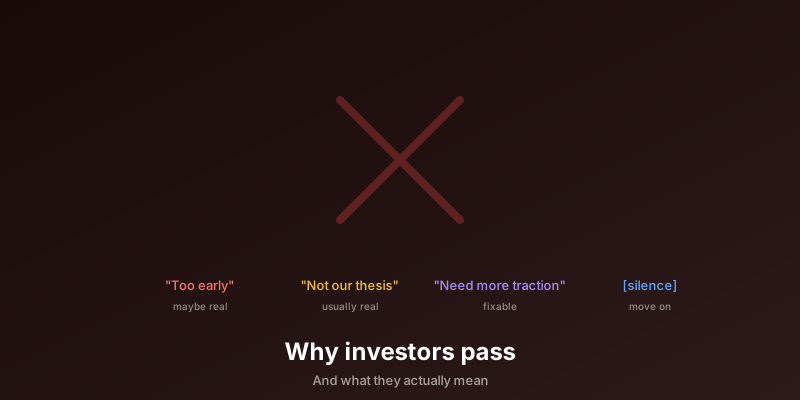
Investors say no in predictable ways. Here's what each rejection actually means, and which ones are worth following up on.
The pass rate reality
Even great companies hear "no" from most investors. A 10% conversion rate from first meeting to term sheet is normal. That means 90% of your meetings end in some form of rejection.
Not all rejections are equal. Some are permanent. Some are temporary. Some are actually "maybe."
"Too early for us"
What they say: "We love what you're doing, but it's a bit early for our fund. Come back when you have more traction."
What it means: One of three things:
- They genuinely invest at a later stage and you're not there yet
- They're not convinced but don't want to say why
- They're interested but need to see momentum before committing
How to tell which: Ask directly. "What would you need to see for this to be a fit?" If they give specifics ($X MRR, Y customers, a key hire), it's real. If they're vague, they're just being polite.
Follow-up potential: High if they gave specifics. Send an update when you hit those milestones.
"Not our thesis"
What they say: "This is interesting, but it doesn't fit our current investment thesis."
What it means: They have specific sectors or stages they focus on, and you're not in them.
How to tell if it's real: Check their portfolio. If they've invested in companies like yours before, the thesis excuse is probably cover for something else. If they really only do enterprise SaaS and you're consumer, it's legitimate.
Follow-up potential: Low. Don't try to convince them their thesis is wrong. Move on.
"We're not seeing the market"
What they say: "We're not sure this is a big enough opportunity."
What it means: Your TAM story didn't land. Either the market seems too small, too crowded, or they don't believe your assumptions.
How to tell if it's fixable: This is usually a pitch problem, not a company problem. If you believe the market is big, work on how you're communicating it. Bottom-up sizing beats top-down. Specific customer segments beat "everyone."
Follow-up potential: Medium. If you improve your market narrative or get traction that proves market size, worth re-engaging.
"We're worried about competition"
What they say: "There are a lot of players in this space. We're not sure you can win."
What it means: They don't see your differentiation clearly, or they think the market will be winner-take-all and you're not the likely winner.
How to tell if it's fixable: Ask who they see as the main competition. If they name companies you don't consider competitors, you have a positioning problem. If they name your actual competitors, you need a better answer for why you'll win.
Follow-up potential: Medium. A big customer win or clear differentiation could change their mind.
"The valuation doesn't work for us"
What they say: "We love the company, but the valuation is too rich for our model."
What it means: They think you're overpriced for your stage. Their fund economics don't work at your price.
How to tell if it's real: If multiple investors say this, you might be priced too high. If only one investor says it, they might just be cheap.
Follow-up potential: Low unless you're willing to adjust terms. They're unlikely to come back at the same price.
"We passed on a similar company before"
What they say: "We looked at [competitor] last year and decided not to invest in this space."
What it means: They've already made a call on your market and it was negative. They're anchored to that decision.
Follow-up potential: Very low. They'd have to admit they were wrong about the space, which is hard for anyone.
"We're at capacity"
What they say: "We're full on new investments right now. Bad timing."
What it means: Either they're genuinely fully deployed, or they're passing without committing to a reason.
How to tell if it's real: This is common at the end of fund cycles. If they just closed a bunch of deals, it might be true. If their portfolio is lean, it's probably an excuse.
Follow-up potential: Medium. Worth checking back in 3-6 months if they claimed it was timing.
"We need to see more before we can commit"
What they say: "This is promising, but we'd like to track you for a while before making a decision."
What it means: They're interested but not enough to move now. They want to see if you can execute without them.
How to tell if it's real interest: Ask for specifics. "What exactly would you want to see?" If they give clear milestones, add them to your update list. If they're vague, they're probably just keeping the door open out of politeness.
Follow-up potential: High if you get the milestones. Send quarterly updates. Be specific about progress.
The silence
What they do: Stop responding to emails. No official pass, just ghosting.
What it means: They've decided not to invest but don't want to have the conversation.
Follow-up approach: One polite follow-up asking for a decision. "Hi [Name], following up on our conversation. Totally understand if it's not a fit. Would be helpful to know either way so I can focus my time."
If still no response, move on. They've told you their answer.
Which "no"s to chase
Worth following up:
- Specific milestone-based passes ("come back at $X MRR")
- Timing-based passes ("we're full right now")
- Clear interest with specific concerns you can address
Not worth following up:
- Thesis mismatches
- Valuation disagreements you won't budge on
- Vague "not for us" without specifics
- Ghosting after multiple attempts
The meta-lesson
If you're hearing the same objection repeatedly, it's not bad luck. It's a signal. Either your pitch isn't landing, your traction isn't strong enough, or your market positioning is off.
Track the reasons. Look for patterns. Adjust accordingly.
Every "no" is data. Use it.
Enjoyed this article? Share it.