The first mistake most founders make is opening PowerPoint too early. Before you build a deck, build your pitch. That means a clear, concise narrative that answers the real investor questions without buzzwords, and without assumptions that your visuals will do the talking for you.
Start with narrative, not slides
Think of your pitch like a due diligence preview. Investors are scanning for fit, not admiring design. What they want is clarity: What are you building? Why now? Who is it for? How big is the upside?
That’s why the best decks start with a written narrative like the structure Pitchkit uses. Before designing anything, founders should walk through these sections:
- Executive Summary
- Problem
- Solution
- Product
- Market
- Competition
- Traction
- Go to Market
- Financials
- Team
- Ask
- Vision
Each section forces you to clarify assumptions. If your traction is soft, your problem better be urgent. If your market is vague, your ICP and distribution better be razor sharp. Most “beautiful” decks that flop do so because they fail to meet this bar.
Use text first: notion is fine
Especially if you're early-stage, you can skip the deck altogether and write the pitch in Notion. I’ve seen early-stage rounds raised with nothing but a clean Notion doc and an honest call. Investors don’t need transitions or illustrations: they need to understand the bet.
In fact, text-first formats help remove noise. They let you focus on getting the right information in the right order. That’s what makes the difference between a “maybe” and a call.
Then build the deck (if you even need to)
Only after your pitch narrative is clear should you start building a deck (if you need one!). Use your written answers as the content. Each slide corresponds to one of the 13 sections. Cut anything that’s there “just because.”
A few simple rules for the deck:
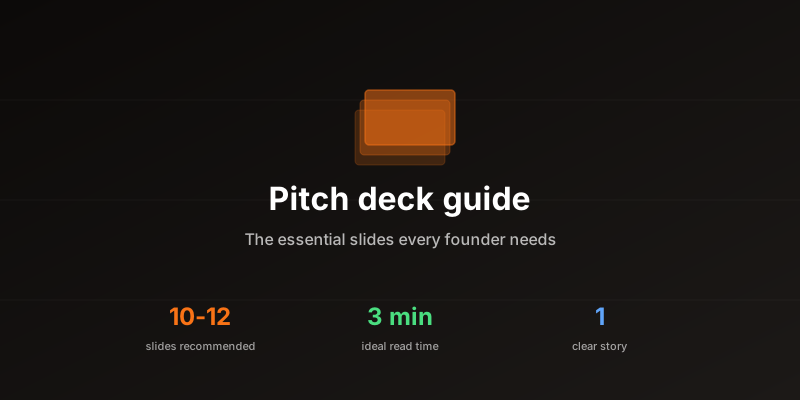
- Keep it short: 10 to 13 slides max
- One message per slide
- Every claim backed with a number or proof
- Avoid product screenshots unless you’ve validated usage or retention
- Team slide should show why this team, not just logos
Good decks are boring in the right way. They make the investor feel informed, not impressed. That’s how you get the meeting.
Tl;dr: how to make a pitch deck
- Write your pitch first. Use the section structure.
- Skip design tools. Use Notion if needed.
- Only make a deck if you have to. Build it directly from the narrative.
- Keep it short, factual, and specific.
- Your goal isn’t to look good. It’s to get to the call.
Enjoyed this article? Share it.