Founders consistently underestimate how long fundraising takes. Here's the reality.
The timeline everyone expects
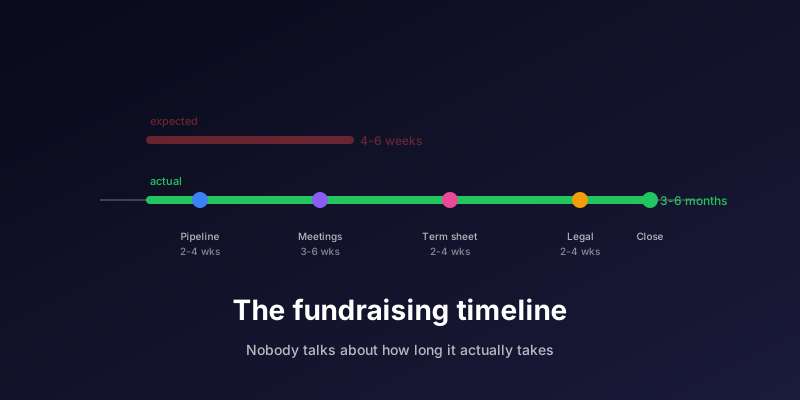
"We'll raise in 4-6 weeks."
I hear this from almost every first-time founder. It's almost never true.
The timeline that actually happens
Pre-seed: 2-4 months (from first email to money in bank) Seed: 3-6 months Series A: 4-8 months
These numbers include:
- Building the pipeline (researching, reaching out, getting intros)
- Initial meetings (15-30 calls/meetings)
- Deep dives and partner meetings
- Term sheet negotiation
- Due diligence
- Legal documentation
- Wire transfer
Each step takes longer than you think.
The breakdown
Building pipeline: 2-4 weeks
Before you can pitch, you need meetings. That means:
- Researching relevant investors
- Crafting personalized outreach
- Working your network for intros
- Following up (repeatedly)
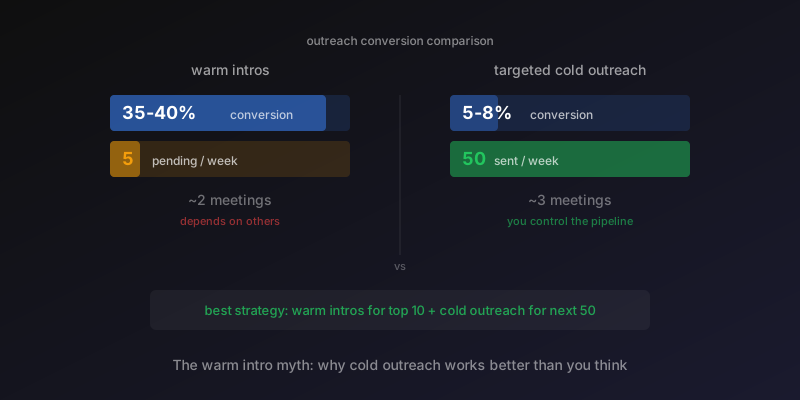
Expect a 20-30% response rate on warm intros. Expect 5-10% on cold outreach. You need 30+ meetings to find your lead investor.
Initial meetings: 3-6 weeks
You'll have a lot of first meetings. Most won't go anywhere.
The pattern:
- Week 1-2: First wave of meetings (10-15 calls)
- Week 2-3: Follow-ups from interested investors
- Week 3-4: Second meetings with serious contenders
- Week 4-6: Partnership meetings at interested firms
This assumes things go well. If you need to iterate on your pitch or get feedback that changes your approach, add 2-4 more weeks.
Getting to term sheet: 2-4 weeks
Once investors are interested, they need internal buy-in. At most funds, this means:
- Partner meeting presentation
- Reference checks (they'll call your customers, former colleagues, other investors)
- Market diligence
- Team background checks
You have limited control over this timeline. Some funds move fast (2 weeks). Others are notoriously slow (6+ weeks).
Negotiation and legal: 2-4 weeks
You have a term sheet. You're not done.
- Term sheet negotiation: 3-7 days
- Legal document preparation: 1-2 weeks
- Legal review and comments: 1 week
- Final signatures: 2-3 days
- Wire transfer: 2-5 business days
I've seen this phase stretch to 6 weeks when legal gets complicated.
Why it takes so long
Investor calendars
VCs take a lot of meetings. Getting on their calendar can take 1-2 weeks. Getting a follow-up scheduled takes another week. This compounds quickly.
Decision by committee
Most funds require partner consensus for investments. One partner can champion you, but others need to be convinced. This takes time and multiple meetings.
Holiday and vacation gaps
Start raising in November? Expect December to be dead. Start in July? August is slow. Factor in 2-4 weeks of lost time around major holidays.
Due diligence surprises
Reference checks surface concerns. Technical due diligence reveals questions. Legal finds something unexpected. Each issue adds days or weeks.
How to protect yourself
Start earlier than you think
If you want money in bank by June, start the process in February. Not April.
Raise when you don't need to
The worst time to raise is when you're running out of money. You have no leverage. Investors know it.
Start raising when you have 9-12 months of runway left. This gives you time to be selective.
Run a tight process
A structured fundraising process shortens timelines:
Week 1-2: Soft outreach to gauge interest Week 3-4: Schedule meetings in concentrated windows Week 5-6: All first meetings happen Week 7-8: Partner meetings Week 9-10: Term sheets
Running meetings in parallel creates competition between investors. Serial processes drag on.
Set deadlines (carefully)
Once you have investor interest, setting a soft deadline can accelerate decisions. "We're hoping to close this round by [date]" signals you have momentum.
But only do this if you have options. An artificial deadline with no other interest looks desperate.
Keep building
The biggest mistake: stopping execution to focus on fundraising.
Continue hitting milestones while you raise. New traction gives investors FOMO. Stalled metrics give them pause.
The mental game
Fundraising is emotionally brutal. Here's what to expect:
Week 1-2: Optimism. You're getting meetings. This seems doable.
Week 3-4: Confusion. Some investors are excited, others pass. You're not sure what's working.
Week 5-6: Doubt. You've been at this for over a month. No term sheet yet. Maybe the deck needs work?
Week 7-8: Fatigue. You're tired of telling the same story. You're behind on product. The fundraise is taking over your life.
Week 9+: Either you have momentum toward a close, or you're considering resetting and trying again later.
This emotional arc is normal. Everyone goes through it. The founders who succeed keep going.
Red flags in the process
If these happen, something is wrong:
- No meetings after 3 weeks of outreach: Your positioning isn't landing. Get feedback and iterate.
- Meetings but no follow-ups: You're not passing the "would I want to work with this person?" test. Get honest feedback.
- Lots of interest but no term sheets: Either the market is crowded, your terms are wrong, or there's a concern you're not addressing.
The honest timeline
If you're raising pre-seed:
- Best case: 6 weeks
- Realistic case: 10-12 weeks
- Worst case: 4-6 months (or you don't close)
If you're raising seed:
- Best case: 8 weeks
- Realistic case: 12-16 weeks
- Worst case: 6+ months
Plan accordingly. Start earlier than feels comfortable. Keep building while you raise. Even great companies take time to fund.
The process is long. But it ends. And when you have money in the bank, you'll barely remember the grind it took to get there.
Enjoyed this article? Share it.