AdviceJanuary 26, 2026
From pitch to follow-up: the 7-day post-meeting playbook
You had a great investor meeting. Now what? The day-by-day guide to following up without being annoying.

Mari Luukkainen
Founder
You had a great investor meeting. Now what? The day-by-day guide to following up without being annoying.
Mari Luukkainen
Founder
You had a great investor meeting. Now what? The 7-day playbook for what happens after you pitch.
Don't wait until the next day. Investors take dozens of meetings. They need to remember you.
Template:
Subject: Great chatting - [your company name]
"Hi [Name],
Thanks for taking the time today. I enjoyed the conversation, especially your questions about [specific topic they raised].
As promised, here's [whatever you committed to sending: the deck, intro to customer, data point they asked about].
Happy to dig deeper on anything. Looking forward to the next step.
Best, [Your name]"
What to include:
What not to include:
Within an hour of the meeting, write down:
You'll need this for future conversations and for tracking across multiple investors.
If they asked for additional materials, send them within 48 hours. Common requests:
Customer references: "Happy to intro you to [customer]. I've reached out to them. Expect an email from [customer name] by [day]."
Then actually facilitate that intro. Don't leave it hanging.
Financial model: If they asked for projections, keep it simple. A 24-month P&L with clear assumptions. Don't send a 50-tab Excel monster.
Technical documentation: For technical due diligence, prepare a one-pager on your architecture, security practices, or whatever they asked about.
Send materials in the format they can easily forward. PDF > Google Docs link. Summary > full document.
If they said they'd get back to you by a certain date and didn't, send a gentle nudge.
Template:
"Hi [Name],
Following up on our conversation from [day]. I know you mentioned wanting to discuss internally this week. Curious if there are any other questions I can answer.
Also happy to share an update: [brief new development: new customer, new metric, new hire].
Best, [Your name]"
The key: Include a small new piece of information. This gives them a reason to respond beyond just "bumping" the thread.
If you haven't heard back, the best follow-up includes new data.
Examples of good updates:
Template:
"Hi [Name],
Quick update: [new milestone]. Thought you'd want to know given our conversation about [relevant topic].
Still excited about the possibility of working together. Let me know if helpful to connect again.
Best, [Your name]"
This keeps you top of mind without being pushy.
By day 7, you should have a sense of where you stand:
Green light: They're doing more diligence, scheduling partner meetings, or moving forward actively.
Yellow light: They're "still discussing internally" with no clear timeline.
Red light: No response, or a polite "we're going to pass."
For yellow lights, it's okay to ask directly:
"Hi [Name],
Wanted to check in on timing. We're making progress on the round and want to make sure we leave room for funds we're most excited about.
Any sense of timeline on your end?
Best, [Your name]"
This creates gentle urgency without being aggressive.
If they pass, respond graciously. The fundraising world is small.
Template:
"Thanks for letting me know. Appreciate you taking the time to look at this.
If it's helpful, I'd love to understand what drove the decision. Always looking to improve how we communicate the opportunity.
Either way, I'll keep you posted on our progress. Would love to reconnect down the road.
Best, [Your name]"
Many "no"s become "yes"s later. Stay in touch. Send quarterly updates. The relationship doesn't end with a pass.
Some founders assume "they'll reach out if interested." Wrong. Investors are busy. Follow-up is your job.
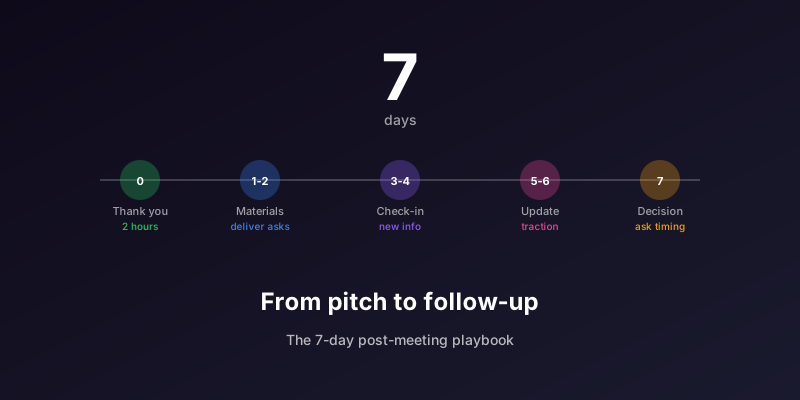
Emailing every day makes you look desperate. Stick to the timeline: thank you (day 0), check-in (day 3-4), update (day 5-6), decision ask (day 7).
If they didn't ask for your financial model, don't send it. More information isn't better. It's more to review, more potential concerns, more friction.
Email the partner directly. Cc'ing assistants can feel like you're trying to apply pressure.
If they passed, don't immediately ask "Can you intro me to other investors?" This is tone-deaf. Wait a few weeks if you're going to ask at all.
Run your fundraise like a sales process. Track each investor:
Firm A (1/15): Partner meeting scheduled for 1/20. Asked about retention.
Firm B (1/12): Waiting for response. Follow up 1/18. Concerned about market size.
Firm C (1/10): Passed. Send Q2 update. Liked team, timing not right.
Update this daily. Know where every conversation stands.
If you're beyond day 7 and still in limbo:
The best investors decide quickly. Long, drawn-out processes often end in passes. Don't spend months chasing one fund when you could be closing others.
When you have a term sheet and it's time to close:
"Hi [Name],
Wanted to give you an update: we've signed a term sheet with [fund] and will be closing shortly.
Really appreciated your time and thoughtfulness through this process. Would love to stay in touch and keep you posted on our progress.
Best, [Your name]"
You'll fundraise again. These relationships matter beyond this round.
Enjoyed this article? Share it.
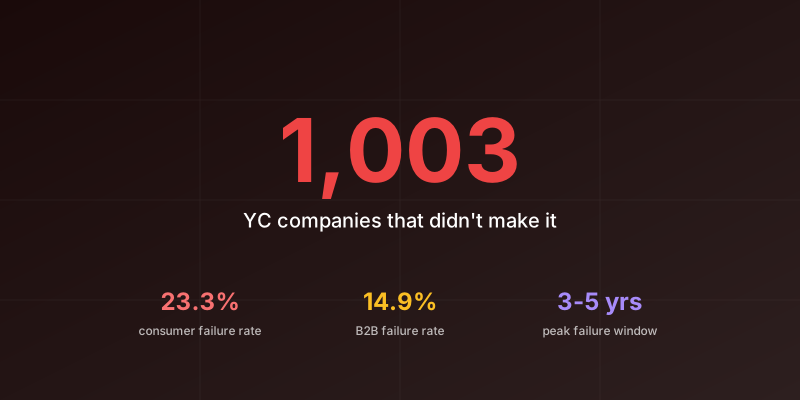
We analyzed the 1,003 YC companies that shut down. Industry patterns, one-liner differences, and when companies die.
 Mari Luukkainen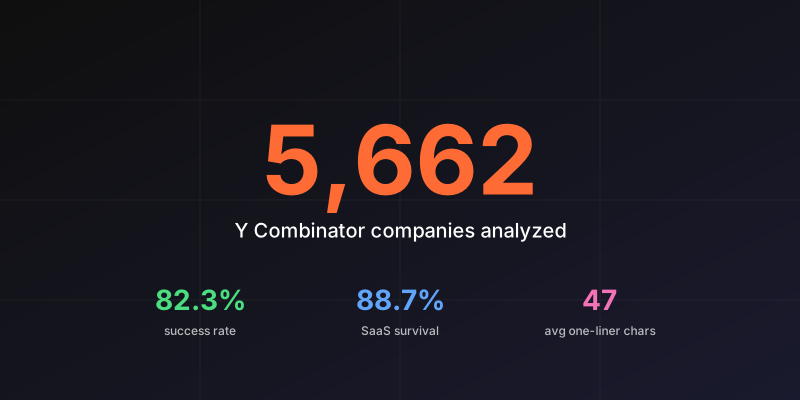
We analyzed 5,662 YC companies. 82.3% success rate, the rise of AI, and what top company one-liners have in common.
Mari Luukkainen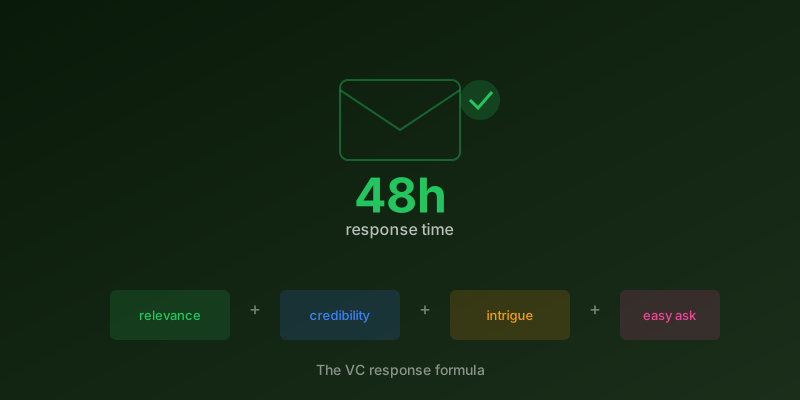
Why do some cold emails get responses while others disappear? The 4-part formula for investor outreach.
Mari Luukkainen