Europe's pre-seed accelerator landscape has grown significantly. What used to be a handful of programs is now a diverse ecosystem spanning nearly every major market. For founders raising their first round, picking the right accelerator is one of the highest-leverage decisions you can make.
Here is what you need to know about pre-seed accelerators in Europe heading into 2026.
What pre-seed accelerators actually do
Pre-seed accelerators invest small checks, typically 25K to 150K, in exchange for equity. The investment itself is usually the least important part. The real value comes from structured mentorship, investor introductions, and the signal that acceptance sends to later-stage investors.
Most programs run 3 to 6 months. You get office space (sometimes), a curriculum, demo day access, and a cohort of other founders going through the same thing. The best programs also give you direct access to partners at seed and Series A funds.
Top pre-seed accelerators by region
Nordics
The Nordic ecosystem punches above its weight in early-stage funding. Programs like Antler run large cohorts across multiple Nordic cities, investing at pre-seed and connecting founders to their global LP network. Finland has a strong ecosystem around Slush and Helsinki-based programs, while Sweden's Stockholm scene offers proximity to later-stage capital.
Western Europe
The UK remains the largest accelerator market in Europe, with London-based programs covering every vertical from fintech to climate. France has built a strong support system around Station F and connected programs. The Netherlands and Belgium have smaller but focused programs, often with government co-investment.
DACH region
Germany's accelerator scene is concentrated in Berlin and Munich, with programs that often have corporate backing. This can be an advantage for B2B startups looking for early enterprise customers. Austria and Switzerland have smaller programs but strong connections to corporate innovation budgets.
Southern Europe
Spain and Portugal have seen rapid growth in accelerator programs, partly driven by lower costs of living that attract international founders. Lisbon and Barcelona are the main hubs, with programs that often focus on helping founders access the broader European market.
Central and Eastern Europe
This region has some of the fastest-growing accelerator ecosystems in Europe. Lower valuations and strong technical talent make it attractive for investors. Programs in Poland, Czech Republic, and the Baltics often bridge founders to Western European and US investor networks.
How to evaluate an accelerator
Not all programs are worth the equity you give up. Here is what to look at:
Alumni outcomes. What happened to companies from the last 3 cohorts? How many raised follow-on funding? This is the single best predictor of program quality.
Investor network. Which VCs show up to demo day? Do they actually invest, or just attend? Ask alumni directly.
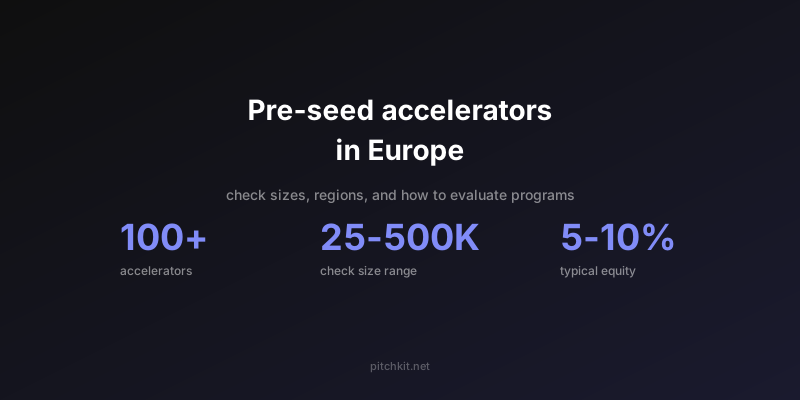
Check size and terms. Standard is 25K to 150K for 5-10% equity. Be cautious of programs asking for more than 10% at pre-seed. Some newer programs offer SAFE notes instead of priced rounds, which is founder-friendly.
Mentorship quality. Generic business advice is everywhere. The best programs match you with mentors who have built companies in your specific space.
Post-program support. What happens after demo day? The best accelerators continue to help with fundraising, hiring, and customer introductions for years after the program ends.
Check sizes and what to expect
From our database of 1,100+ European investor profiles, accelerator check sizes typically break down as follows:
- Micro accelerators: 25K to 50K, often equity-free or grant-based
- Standard programs: 50K to 150K for 5-8% equity
- Top-tier programs: 100K to 500K, sometimes with follow-on rights
The trend is toward larger checks. Programs that invested 25K five years ago now invest 75K to 100K, reflecting both the rising cost of getting a startup off the ground and increased competition for top founders.
When an accelerator is not the right move
Accelerators are not for everyone. If you already have strong investor relationships, significant traction, or domain expertise that no program can match, you might be better off raising directly. The equity cost of an accelerator, typically 5-10%, is meaningful at pre-seed when your total dilution budget is limited.
Skip the accelerator if you are raising on clear metrics. Apply if you need structure, network, or signal.
Finding the right program
The best approach is to talk to alumni. Every program looks good on paper. The reality of mentorship quality, investor access, and post-program support varies enormously.
Pitchkit's investor database includes 100+ accelerator profiles across Europe, filterable by country, sector, and check size. Use it to build a shortlist, then reach out to alumni from your top picks before applying.
Enjoyed this article? Share it.