
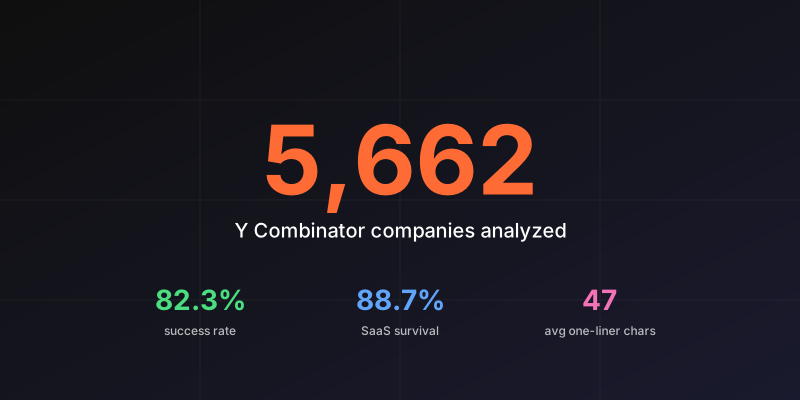
We analyzed 5,662 Y Combinator-funded companies. Here's what the data actually says.
The numbers
82.3% of YC companies are still operating, acquired, or public. Only 17.7% have shut down.
Of those 5,662 companies:
- 69% are still active
- 12.9% were acquired
- 0.4% went public (23 companies including Airbnb, Stripe, Coinbase, DoorDash, GitLab)
- 17.7% are inactive
The "90% of startups fail" stat doesn't hold for YC companies. The selection process matters.
What's getting funded
B2B dominates. 2,860 YC companies (50.5%) are B2B. The next largest category is Consumer at 861 (15.2%).
SaaS is the safest bet. 1,129 SaaS companies with an 88.7% success rate. That's higher than any other category.
AI is accelerating. In 2019, YC funded 70 AI companies. In 2025, that number was 403. AI now represents the majority of new YC companies.
The top tags across all YC companies:
- SaaS (1,129)
- B2B (1,101)
- Artificial Intelligence (885)
- Fintech (701)
- Developer Tools (533)
Acquisition rates by industry
Not all industries exit the same way.
| Industry | Acquisition Rate | |----------|-----------------| | Consumer | 17.1% | | Real Estate | 15.0% | | Education | 14.3% | | B2B | 13.6% | | Fintech | 12.2% | | Healthcare | 7.5% | | Industrials | 7.2% |
Consumer companies get acquired more often. Healthcare companies rarely get acquired, but they go public more frequently (5 IPOs from 652 companies).
The one-liner pattern
We analyzed the one-liners of all 91 "top companies" (YC's own designation for their most successful graduates).
Average length: 47 characters. Short and direct.
The most common words in top company one-liners:
- "platform" (17 times)
- "modern" (8 times)
- "businesses" (6 times)
- "software" (6 times)
- "financial" (6 times)
Some examples:
Stripe: "Payments infrastructure for the internet."
Segment: "Software and APIs to collect, clean, and control customer data."
Gusto: "Provides growing businesses with everything to take care of their team."
PagerDuty: "Real-time visibility into critical apps and services all in one place."
Notice the pattern: [What it does] + [For whom]. No buzzwords. No "revolutionary" or "disruptive."
Scale differences
The gap between "top companies" and everyone else is massive.
- Average team size (all companies): 49 employees
- Average team size (top companies): 1,184 employees
The top 91 companies (1.6% of YC) represent a disproportionate share of value creation. This is the power law in action.
What this means for your pitch
If you're building in SaaS, B2B, or AI, you're in the categories YC funds most heavily. That's not a coincidence. These markets are large and have clear paths to revenue.
If you're building in healthcare or industrials, know that the exit path is different. Fewer acquisitions, but more IPOs for the companies that make it.
Your one-liner should be under 50 characters. Use concrete words like "platform," "software," or "infrastructure." Avoid adjectives.
The data is in Competitor analysis. Use it.
Enjoyed this article? Share it.


